
Everything, Everywhere, Faster
- May 21
- 3 min read
I started working, bright eyed and bushy tailed, in the summer of 2011 in the aftermath of the Great Financial Crisis. I was pretty clueless, so much so that when a colleague asked for a green tea I put milk in it.
Luckily that maladjusted young whippersnapper is no more. A few more grey hairs and I no longer offer to make the tea.
Since I’ve been in the job, the global stock market has done this.

A 5x return. Not bad.
But don’t let that chart fool you, along the way we have had to contend with plenty - the Eurozone debt crisis, wars, trade wars, Brexit, Trump, tariffs, COVID, negative oil prices and the Federal Reserve’s fastest rate hiking cycle in history.
There have been some big, ugly sell offs but the one thing we haven’t really had to contend with is a long, drawn out bear market. The kind that saps your soul year after year, periodically offering up hope and yanking it back away almost as quick.
The below table shows the top 10 drawdowns by scale for a 60/40 portfolio going back to 1985.

And the below chart shows the same information, just visually. Every drawdown for a 60/40 portfolio going back to 1990.

Since the Financial Crisis, a diversified portfolio hasn’t experienced a drawdown which lasted longer than a year.
Even during the Financial Crisis itself, a 60/40 portfolio managed to return to its previous high watermark in just over three years. Which doesn’t seem all that long in the context of an existential threat to capitalism.
Market cycles seem to be speeding up, with sell-offs and subsequent recoveries taking less time. COVID offers the classic example of this, stock markets lost a third of their value in about six weeks at the start of 2020, and then went on an absolute tear of a recovery to show a profit by the end of the year. Mental.
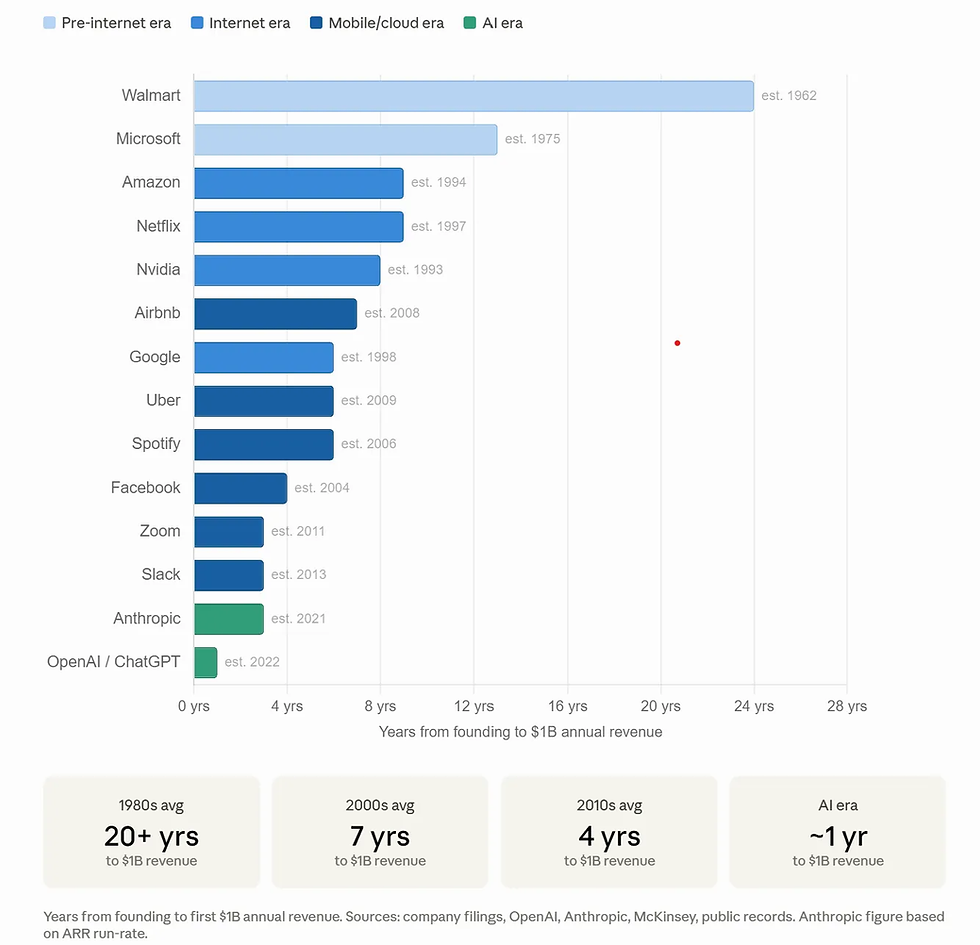
It isn’t just markets either. The below chart shows long it took a number of household name companies to reach $1 billion of annual revenue. A billion! This used to take decades, it now takes months.
It would make sense that markets today move to re-price risk more quickly, in the modern world information is so much more quickly disseminated. It is all there, all available, all the time - and so many large market participants now trade instantly based on automated rules or strategies.
So what is the takeaway for the private investor?
One, making big changes to your financial position during periods of volatility is probably unwise. Being “out of the market” for any period of time during these events is dangerous because recent history tells us that the rip back might (probably will be) be sudden.
The second takeaway I think is that if there was a “proper, old school” bear market that took more than a couple years to play out - it would be really tough for the modern investor to take.
For the modern investor has built up a playbook on how to react to any pullback. “Buy the dip” basically.
How would they cope with a sell-off which is less shock and awe, and more death by a thousand cuts? This would be a real challenge for us all I suspect.
But as prepared, sensible investors we must be ready for this eventuality. It is not off the table.
As “buy and hold” investors the primary risk to our future outcomes is that we are thrown off our plans at the very point of maximum stress - and it is not difficult to see how a long drawn out seller’s market could induce this.
By being forewarned, we are forearmed. For investors, surprise represents the mother of disaster.
Past performance is not indicative of future returns. None of the above is intended to represent advice to any individual. If you have any questions regarding your specific situation, please feel free to contact me at david@beechgrovefinancialplanning.co.uk - or another regulated financial adviser.


Comments